2025 | Qualitative research
Qualitative research project at Aarhus University
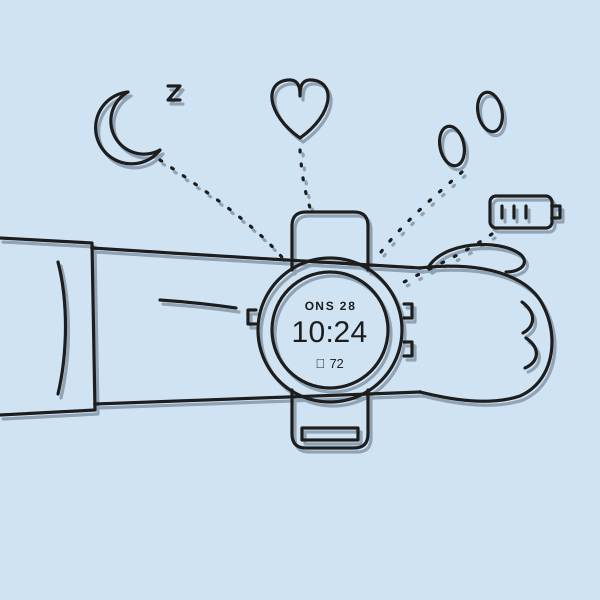
Wearables are no longer just for elite athletes. Smartwatches measure everything from steps and exercise to sleep and stress, and tell us whether we have “slept well” or “been active enough” (Videnskab.dk, 2023). In this exam project, I looked at the Garmin watch and asked how it shapes the way people see their own health and performance.
The study followed two people from the target group of young adults, aged 18 to 30, using three qualitative methods:
- A walkthrough of a Garmin Forerunner 265S (Garmin, n.d.) and the Garmin Connect app, mapping what the design invites the user to do (Light, Burgess & Duguay, 2018)
- A one-week diary study with both participants (Bartlett & Milligan, 2015)
- Semi-structured interviews following up on their diaries, transcribed and coded (Tracy, 2025; Halkier, 2009)
Analysis and findings
The watch turned out to be an actor rather than a passive tool. From setup onwards it frames what counts as activity, puts health data first, and nudges with notifications like “Time to move” and a morning report on how you slept. The body is no longer felt directly, but through the technology (Ihde, 1990).
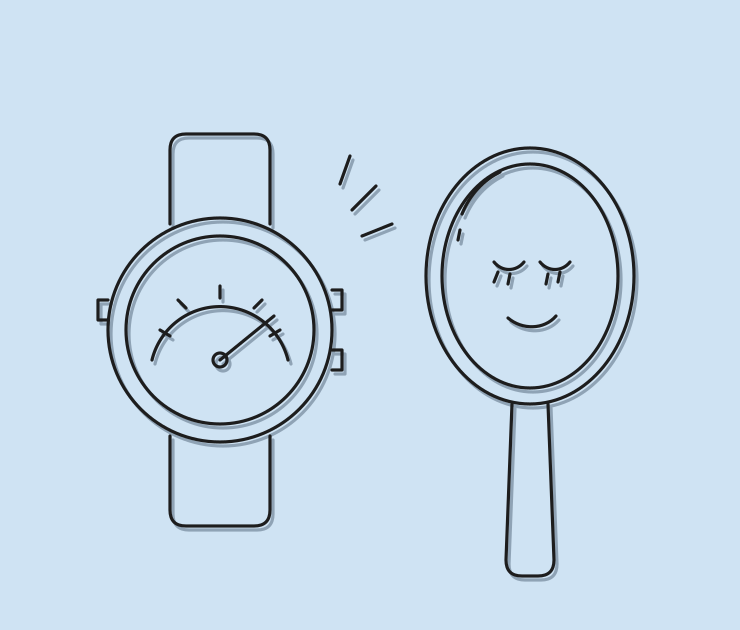
The two participants related to their watches very differently:
- A performance meter. For one participant, the watch set a high bar. They paused it on runs when they wanted to walk, so as not to “ruin” their data, and negative feelings made up 31.4% of their coded interview.
- A mirror. For the other, it brought calm. Calling themselves a “data-and-numbers nerd”, they used it to understand and confirm their body’s signals. Positive feelings made up 33.3% of their interview, and negative ones only 2.8%.
Conclusion
Drawing on the idea of the neoliberal self (Lupton, 2013), the study showed how the participants take on responsibility for their own health and let the watch’s feedback shape them. Its nudging design of colours, order and notifications doesn’t just structure choices (Thaler, 2018). It makes data something you feel in your body (Kennedy & Hill, 2018).
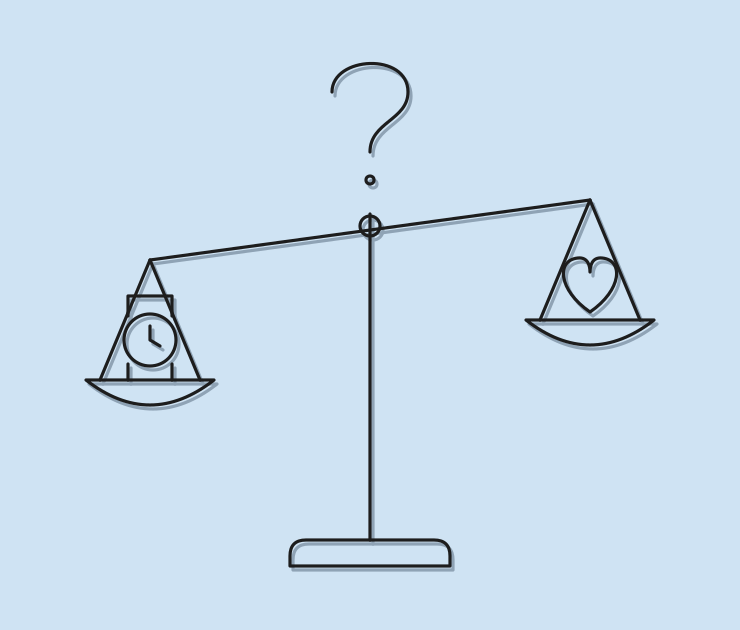
The watch can support healthier habits, but it can also bring guilt and a sense of never being good enough. With only two participants the findings can’t be generalised, but they raise a question worth asking: when health is quantified, who is really in control, the user or the data?
How I use this in practice
This project taught me to look past what a design is meant to do and study what it actually does in people’s everyday lives. At work, I use diary studies and follow-up interviews to get close to how users feel about a product over time, not just in a single test.
It also made me alert to how nudges, notifications and numbers can motivate one user and stress another. I bring that into any design that asks people to track or measure themselves.
References
- Bartlett, R., & Milligan, C. (2015). Diary Method: Methods in Health and Social Care Research. London: Routledge.
- Garmin. (n.d.). Forerunner® 265S. Retrieved 25 May 2025 from https://www.garmin.com/da-DK/p/886689/
- Halkier, B. (2009). Fokusgrupper (2nd ed.). Samfundslitteratur.
- Ihde, D. (1990). Technology and the Lifeworld: From Garden to Earth. Bloomington: Indiana University Press.
- Kennedy, H., & Hill, R. L. (2018). The feeling of numbers: Emotions in everyday engagements with data and their visualisation. Sociology, 52(4), 830–848. https://doi.org/10.1177/0038038516674675
- Light, B., Burgess, J., & Duguay, S. (2018). The walkthrough method: An approach to the study of apps. New Media & Society, 20(3), 881–900. https://doi.org/10.1177/1461444816675438
- Lupton, D. (2013). Understanding the human machine: The quantified self movement and the self-tracking practices. IEEE Technology and Society Magazine, 32(4), 25–30. https://doi.org/10.1109/MTS.2013.2286431
- Thaler, R. H. (2018). From cashews to nudges: The evolution of behavioral economics. American Economic Review, 108(6), 1265–1287. https://doi.org/10.1257/aer.108.6.1265
- Tracy, S. J. (2025). Qualitative research methods: Collecting evidence, crafting analysis, communicating impacts (3rd ed.). Wiley-Blackwell.
- Videnskab.dk. (2023, 15 May). Apps og smartwatches kan ændre sundhedssystemet – og dit helbred. Retrieved 23 May 2025 from https://videnskab.dk/krop-sundhed/apps-og-smartwatches-kan-aendre-sundhedssystemet-og-dit-helbred/